
UFC Freedom 250 was not just another fight card. Staged on the South Lawn of the White House as part of the United States’ 250th anniversary celebrations, it was a deliberate attempt to redefine what a modern sporting event can be — not confined to an arena, not limited to sport, and not built around a single night. Instead, it was positioned as a multi-day cultural activation on one of the world’s most recognisable landmarks. From a sports business perspective, this was not about fights. It was about control of attention. And very few organisations in global sport are currently better at it than the UFC.
A Destination Event Unlike Anything Seen Before
The most important decision the UFC made was not the fight card — it was the location.
By staging Freedom 250 at one of the most recognisable political landmarks in the world, the
UFC effectively removed the need for traditional build-up storytelling. The venue itself became
the headline.
The White House Lawn transformed the card into something closer to a national cultural
moment than a sporting fixture. It created instant global recognition, political curiosity, and media
gravity before a single punch was thrown. This is where the modern UFC model becomes clear: They do not just host events in cities. They turn places into events.
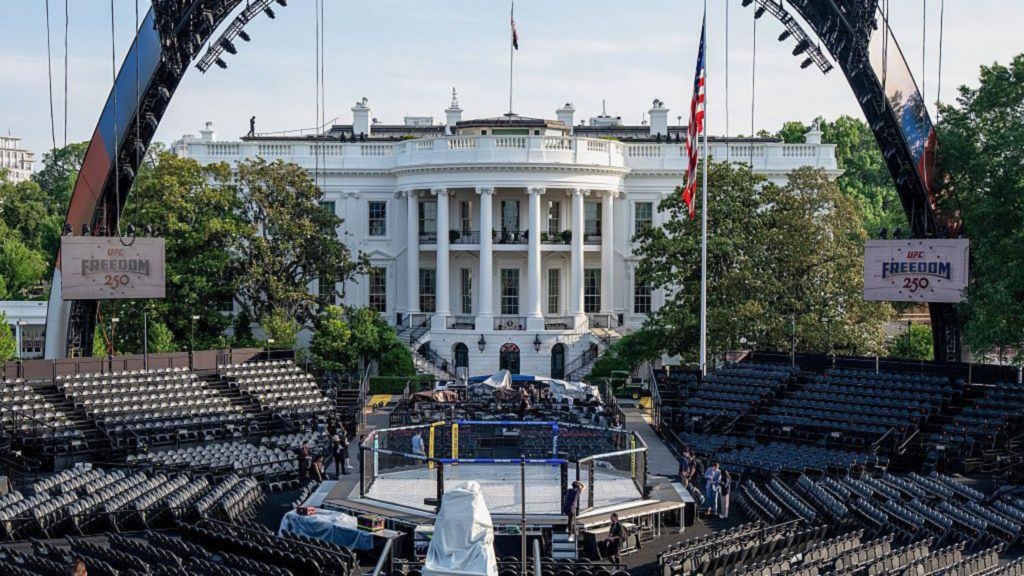
The UFC’s show at the White House: Getty Images
Festivalisation: The Real Product
Freedom 250 was not structured like a fight night. It was structured like a festival.
Across the event window, the UFC layered multiple experiences into a single property:
- Public fan zones and activations
- Live music and entertainment programming
- Press conferences designed as broadcast content
- Watch parties and community events
- Sponsor-led experiences embedded across the venue
The fight card is no longer the product.
It is the climax of a wider entertainment ecosystem.
Meta, Zuckerberg and the Smart Glasses Activation
One of the most talked-about commercial activations came through a collaboration with Meta
and Mark Zuckerberg. As part of the Freedom 250 platform, the initiative included the distribution of smart glasses to blind and visually impaired military veterans — framed as a technology-for-accessibility
programme tied to the broader theme of service and national recognition.
Rather than traditional sponsorship signage, Meta was positioned inside a cultural narrative
about access, technology, and recognition of service. It was one of the clearest examples of how the UFC has shifted sponsorship from exposure to participation.
They Never Stop Selling the Next Fight
Even during the peak of Freedom 250, the UFC continued doing what it does better than any
other sports property in the world: building the next narrative while the current one is still
unfolding.
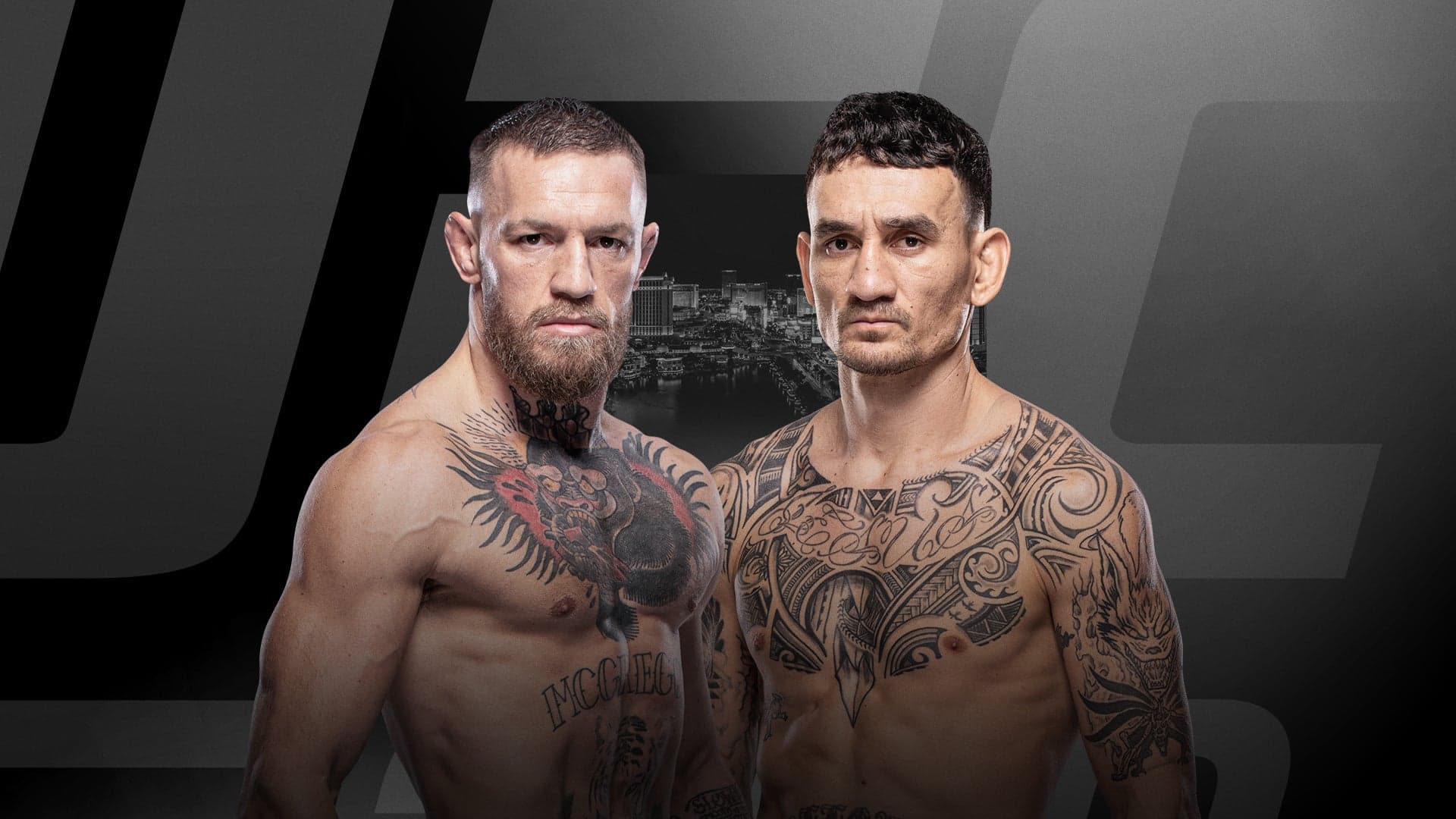
A live video appearance from Conor McGregor and Max Holloway during the event served as a
reminder that nothing in the UFC exists in isolation. Their upcoming fight on 11 July was already being shaped in front of a global audience — not through press releases or standalone promotion, but inside the momentum of the biggest event of the year.
Most sports organisations promote events.
The UFC promotes continuity.
Tyson Fury, Manchester, and the Zuffa Boxing Signal
Tyson Fury’s appearance at UFC Freedom 250 added another layer to what was already a
highly charged event. Just days earlier, Fury had been in Manchester supporting his brother Tommy Fury, reinforcing his continued presence in UK boxing and keeping the Fury family firmly in the sport’s global
spotlight. From there, his transition into a UFC-led event on the South Lawn of the White House
felt intentional — not incidental.
Inside Freedom 250, Fury was seen alongside Dana White, Donald Trump, and Mark Zuckerberg, creating one of the most striking images in modern combat sports: boxing royalty positioned inside a UFC-led political and entertainment spectacle. But the significance went beyond optics. During his appearance, Fury and Dana White teased that a major announcement was in development, with immediate speculation centring on the long-discussed Tyson Fury vs Anthony Joshua fight.
What made this notable was not just the rumour itself, but the implication of structure. Dana White’s visible proximity to Fury, inside a UFC-produced global stage, fuelled growing belief that he could play a more significant role in bringing that fight to market than previously assumed. At the same time, Fury’s presence at a UFC flagship activation marked one of the clearest early signals of Zuffa Boxing’s expanding influence within the wider TKO ecosystem.
Freedom 250 did not just showcase UFC dominance in MMA promotion. It quietly hinted at a future where boxing’s biggest commercial fights may increasingly be shaped, packaged, or distributed through UFC-style promotional infrastructure. Fury did not just attend the event. He became part of a broader signal: that combat sports promotion is converging.
The Fighting Matched the Occasion
There is always a risk with spectacle-driven events that the sport becomes secondary. Freedom 250 avoided that trap.
The fights did not disappear into the production — they reinforced it.
Ciryl Gane’s Heavyweight Authority
Ciryl Gane’s performance against Alex Pereira in the interim heavyweight title bout felt like a
shift in perception rather than just a win. On a stage designed for global attention, he fought with composure and control rather than chaos. The result reinforced the idea that Gane is increasingly comfortable operating at the very top of the heavyweight division. This was not just a victory. It was a statement of legitimacy.
The Main Event: Gaethje Dethrones Topuria to Claim Undisputed Lightweight Gold
Justin Gaethje has never needed context to make a fight matter. On the South Lawn of the White House, he got it anyway — and he made the moment his own. In a main event that lived up to everything the occasion demanded, Gaethje stopped Ilia Topuria via fourth-round TKO — a corner stoppage — to claim the undisputed UFC Lightweight Championship. It is the defining performance of his career, delivered on the biggest stage the UFC has ever constructed.
What made this significant was not just the result, but what each fighter represented coming in.
Topuria entered Freedom 250 with a reputation built on control, precision, and dominance. He
was the champion, and he had never looked beatable. For the first time in his UFC career, that
perception was genuinely challenged — and ultimately broken. His corner’s decision to stop the
fight in the fourth round spoke to the damage Gaethje inflicted, and to the reality that on this
occasion, there was no path back.
Defeat at this level, on this stage, will not diminish Topuria’s standing permanently — champions
who face genuine adversity often become more compelling, not less. But the narrative has
shifted, and the next chapter will be defined by how he responds. For Gaethje, this is something different entirely.
He has always been a fighter whose identity rests on engagement over avoidance — someone
who does not seek the comfortable route but walks directly into resistance. The lightweight title
had circled his career for years. At UFC Freedom 250, in front of a global audience that
extended well beyond the sport’s core base, he closed the distance one final time.
A fourth-round corner stoppage, under the lights of the White House, on the defining event of
the UFC’s anniversary year. On one of the most visible stages the promotion has ever built, Justin Gaethje was exactly what the moment demanded.
The UFC’s Real Achievement: Nothing Was Lost
The most impressive aspect of Freedom 250 is not any single component — it is the balance
between all of them. Most organisations struggle to combine sport and spectacle, commercial and cultural, entertainment and legitimacy, politics and neutrality, celebrity and competition.
The UFC attempted to win all of them at once.
And, on this occasion, largely did.
The fights mattered. The spectacle mattered. The sponsors mattered. The narratives mattered.
Nothing felt sacrificed.
Everything felt connected.
The Abu Dhabi Question
For markets like Abu Dhabi, Yas Island, and the wider UAE combat sports ecosystem, UFC
Freedom 250 is less a spectacle and more a blueprint. It reinforces a shift already underway in global sport: modern events are no longer defined purely by competition. They are defined by destination power, multi-day storytelling, commercial integration depth, cultural crossover appeal, and global media amplification.
Abu Dhabi has already positioned itself as one of the world’s leading combat sports hubs. UFC
Fight Night Abu Dhabi has proven that elite-level MMA and a premium market environment are
not only compatible — they are commercially powerful when properly aligned. The next step is not simply hosting elite fights. It is building festival-scale global tentpole events where sport is the anchor, not the limit. UFC Freedom 250 shows what that evolution looks like when fully realised.
Final Thought: This Was Never Just a Fight Card
UFC Freedom 250 will not be remembered purely for results inside the cage. It will be remembered for what it represented: a sporting organisation operating as a global entertainment platform; a political landmark transformed into a live broadcast ecosystem; a commercial machine embedded inside cultural storytelling; and a promotion that understands its most valuable product is not the fight — but attention itself.
The UFC did not just stage an event at the White House.
It used the White House to stage the future of live sport.

Related Articles
McGregor’s Anticipated UFC 329 Return: Why Live Sport Remains the Most Unpredictable Asset in Entertainment