

The global rugby calendar is undergoing its most significant restructuring in decades. World Rugby’s proposed Nations Championship format promises to revolutionise how international rugby travel trends evolve, fundamentally altering supporter journeys, venue capacity planning and corporate hosting strategies across the sport’s premier fixtures.
The Nations Championship Structure: What’s Changing
The World Rugby Nations Championship represents a seismic shift from the traditional touring model. Billed as a “North vs. South” competition, the tournament brings together 12 of the world’s best teams from the Northern and Southern Hemispheres, kicking off in July.
Unlike the current structure where November internationals and July tours operate independently, the Nations Championship format creates a continuous narrative. Every Test match carries competition points. Every fixture matters for final standings. For supporters and corporate buyers alike, this changes the calculus entirely.
The traditional three-Test series in a single country gives way to a condensed schedule with matches spread across multiple territories within weeks. New Zealand in Auckland one weekend, followed by South Africa in Cape Town the next. The logistical implications are substantial.
Supporter Travel Patterns: From Tours to Circuits
International rugby travel trends have historically centred on the tour model. British and Irish Lions supporters would commit to three weeks following their team across a single nation. Six Nations weekends created predictable migration patterns between Paris, Dublin, Edinburgh, Rome, Cardiff and London.
The Nations Championship format disrupts this rhythm entirely:
- Multi-destination itineraries: Following a tier-one nation now requires rapid movement between continents rather than extended stays in one territory.
- Compressed timeframes: Less time between fixtures means tighter turnarounds for flights, accommodation and ground transport.
- Higher per-trip costs: Multiple international flights within a single campaign replace the traditional single return journey.
- Smaller travelling supporter bases: Only the most committed fans can justify the expense and time commitment of multi-leg global circuits.
For travel operators and hospitality providers, this represents both challenge and opportunity. Package tours must become more sophisticated, offering modular options that allow supporters to join for specific legs rather than full campaigns.

Venue Logistics and Capacity Management
Stadium operators face new complexity under the Nations Championship format. Traditional November and July windows allowed venues to plan well in advance, understanding likely opponents and scheduling infrastructure accordingly.
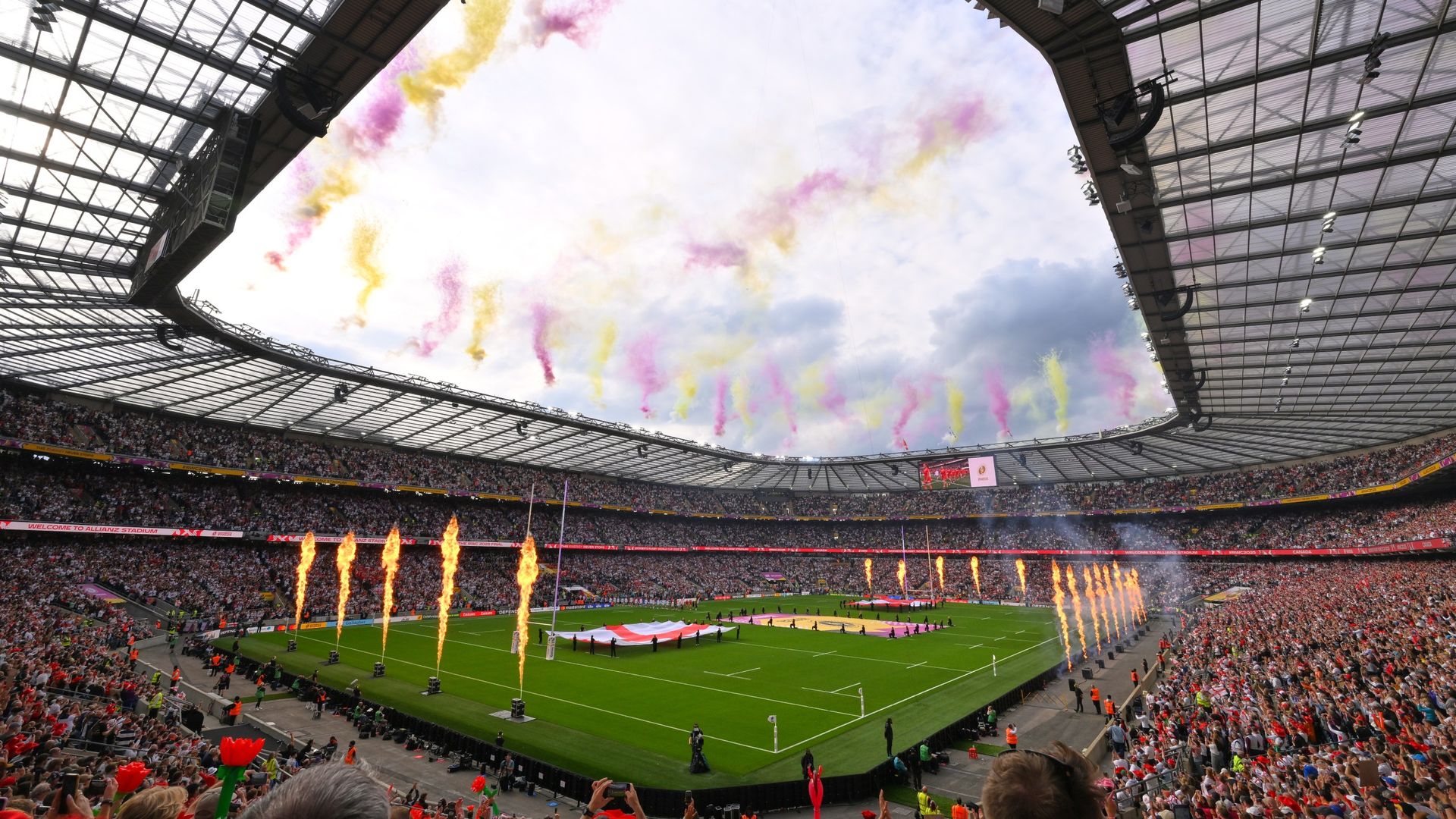
The new structure introduces variables that complicate capacity planning. Each game takes place in the host nation’s country during the rounds, but by hosting some fixtures in neutral venues, the tournament gives teams the chance to play in front of bigger crowds, reach new fans and pull in greater broadcast audiences.
Broadcast scheduling also becomes more intricate. With matches carrying genuine competition weight, kick-off times must balance local attendance appeal against global television audiences. A semi-final in Sydney scheduled for prime-time European viewing might kick off mid-morning locally, impacting gate receipts and atmosphere.
Security and crowd management protocols require revision too. Higher-stakes fixtures attract different supporter demographics. A pool match between England and Argentina carries different crowd dynamics than a winner-takes-all semi-final between the same nations.
Corporate Hospitality: Elite Experiences in a Fluid Calendar
For corporate buyers, the Nations Championship format presents both strategic advantages and planning headaches. The guaranteed competitive significance of every fixture elevates the value proposition for rugby corporate hospitality packages. No dead rubbers. No meaningless friendlies.
However, the compressed schedule and multi-territory nature of campaigns complicates advance booking. Corporations traditionally secured Six Nations hospitality packages a year ahead, knowing exact dates and venues. The new format requires more flexible contracting, with contingency planning for potential semi-final and final hosting.
The opportunity lies in creating high-end multi-match packages that transcend individual fixtures. Rather than selling a single England versus France experience, hospitality providers can curate entire campaign journeys, combining matches across territories with luxury travel, accommodation and exclusive access.
This mirrors the model ES Sport has refined for Formula 1, where the Abu Dhabi Grand Prix forms part of sophisticated season-long engagement strategies for corporate partners seeking continuity and brand alignment across multiple race weekends.
The GCC Angle: Rugby’s Growing Middle East Footprint
While the Nations Championship format focuses on established rugby territories, the GCC market represents untapped potential for international rugby travel trends. Dubai already hosts successful Sevens tournaments, and the region’s position as a global aviation hub makes it ideal for supporters transiting between Northern and Southern Hemisphere fixtures.
There’s precedent in other sports. The UAE has successfully hosted major international sporting events across multiple disciplines for years, building infrastructure and expertise in delivering world-class tournament experiences. A Nations Championship semi-final or final hosted in the Middle East would align with the region’s sports diversification strategy and provide neutral ground for high-stakes encounters.
For GCC-based corporations, the Nations Championship format offers fresh hospitality opportunities beyond traditional European weekends, with potential for bespoke packages that combine business networking with elite rugby experiences across global venues.
Adapting to the New Normal
International rugby travel trends will continue evolving as the Nations Championship format beds in. Early adopters among travel operators, hospitality providers and corporate buyers will gain competitive advantage by understanding the structural shifts before they become entrenched patterns.
The traditional touring model isn’t disappearing entirely, but it’s being supplemented by a faster, more fragmented competitive landscape. Success in this environment requires agility, sophisticated logistics and the ability to create exceptional experiences across multiple territories simultaneously.
For those willing to adapt, the new format presents genuine opportunity. The question is whether the rugby travel ecosystem can evolve as quickly as the competition structure itself.

Related Articles


Fiji Home Match Played 10,000 Miles Away: When a Nation Finds Its Crowd in Someone Else’s City


