

The URC season opener delivered precisely what the league’s architects envisioned when they expanded beyond Celtic borders: high-intensity rugby played before packed stadiums, broadcast across two hemispheres, and featuring players who’ve traded southern sun for northern winters. The competition has become a genuine case study in how strategic expansion can elevate a regional tournament into a truly international product.
Star Transfers Reshape the Competitive Landscape
This season’s transfer activity has rewritten the talent map across the league. Currently contested across Ireland, Scotland, Wales, Italy and South Africa, the URC is exploring options to maintain or grow its club base, reflecting the competition’s ambition to expand its footprint further.
What distinguishes recent transfer windows from previous years is the increasingly bidirectional flow of talent. South African franchises are no longer simply feeding players northward; they’re retaining stars and, in some cases, attracting talent from European clubs. The movement of players between URC territories has created genuine competitive parity across the membership.
This represents more than routine squad building. It signals that the URC has achieved a level of competitive balance that makes every fixture commercially and sporting significant.
Dual-Hemisphere Appeal: Broadcasting’s New Frontier
The league’s scheduling strategy deserves particular attention. Friday night fixtures in Cape Town kick off at 19:00 local time, which lands at 18:00 in Dublin, 19:00 in Rome, and prime Saturday morning in Australia and New Zealand. Sunday afternoon matches in Belfast or Edinburgh reach South African audiences during their Saturday evening.
This temporal arrangement has unlocked commercial value that traditional European competitions couldn’t access. Broadcasters in multiple territories now carry live URC content during valuable slots. Sponsors gain exposure across markets with vastly different consumer profiles but shared rugby passion.
The numbers reflect this dual-hemisphere rugby strategy: broadcast audience figures are up 49 percent globally, and in the UK and Ireland up 24 percent, whilst attendances have increased 67 percent on the previous year. These metrics demonstrate the commercial traction the competition has achieved across its expanded geography.

Stadium Economics: Capacity and Corporate Demand
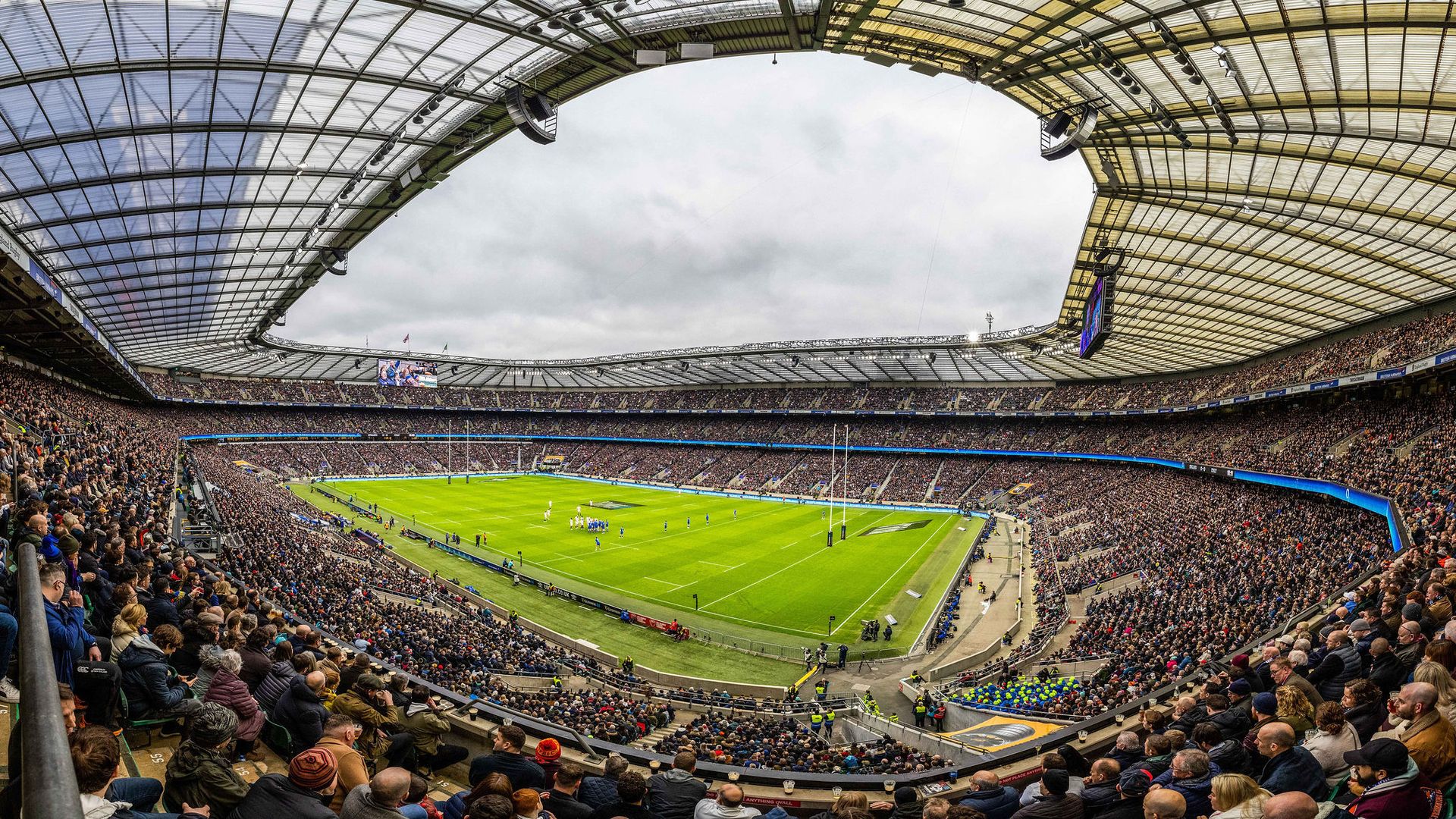
Attendance figures across the opening rounds have shown significant growth. The substantial increase in crowds reflects both the competitive quality on offer and the maturing commercial infrastructure around matchday experiences.
The corporate hospitality component has evolved considerably. What began as traditional rugby hospitality (pre-match function rooms and post-match player appearances) has developed into integrated experiences. Clubs now offer:
- Season-long packages that include home and away fixtures across multiple countries
- Multi-territory access for corporate clients with operations in Ireland, South Africa, Italy, Scotland and Wales
- Player engagement programmes that extend beyond match day into leadership seminars and team-building sessions
- VIP travel components linking fixtures with destination experiences in host cities
For organisations operating across the regions the URC serves, this presents a compelling proposition: one sport, multiple markets, consistent brand visibility. Rugby hospitality has become a tool for relationship-building across borders, not just entertainment.
South African Integration: Beyond the Novelty Phase
When the four South African franchises joined the competition, sceptics questioned whether travel logistics, time zones and cultural differences would undermine competitive integrity. Several seasons later, those concerns have been comprehensively answered.
South African sides have proven themselves fully competitive. They now hold winning records against Celtic opposition in Cape Town and Durban. Equally significant, Irish and Welsh clubs have learned to compete effectively at altitude in Johannesburg and Pretoria.
This isn’t tokenistic inclusion. It’s genuine integration that has elevated the standard across all 16 teams. The physicality South African forwards bring has forced European packs to adapt. The structured attacking patterns refined in Dublin and Edinburgh have influenced how Springbok franchises construct phase play.
Commercial Growth and the Gulf Connection
The URC’s expansion coincides with broader shifts in rugby’s commercial geography. European rugby is increasingly looking toward Gulf markets for sponsorship, tourism partnerships and exhibition fixtures.
Several URC clubs have conducted pre-season training camps in the UAE. Others have explored partnerships with Gulf-based sponsors seeking access to European audiences. The league’s international footprint (spanning Western Europe and Southern Africa) offers brands a genuinely diverse demographic reach.
For sports marketing agencies operating in the region, the URC represents an opportunity to connect clients with a competition that delivers both heritage authenticity and modern international scale. ES Sport has observed growing interest from GCC-based organisations seeking rugby partnerships that extend beyond single-territory exposure.
What the Season Ahead Holds
The opening rounds set a tone: tight margins, physical contests, and outcomes that reflected the competitive balance the league has achieved. Matches across all territories delivered the intensity expected from a competition that now spans two continents and multiple rugby cultures.
As the season unfolds, the commercial narrative will run parallel to the sporting one. Sponsors will assess return on investment across multiple markets. Broadcasters will refine their scheduling. Clubs will develop their hospitality offerings to meet demand from corporate clients who recognise the URC’s unique cross-border value.
The league has moved beyond its experimental phase. What we’re witnessing now is rugby league growth executed with strategic intent: a competition that understands its audience spans time zones, cultures and hemispheres, and has built its product accordingly.

Related Articles
International Rugby Travel Trends: Navigating the New Nations Championship Format



Fiji Home Match Played 10,000 Miles Away: When a Nation Finds Its Crowd in Someone Else’s City

Rugby’s Power Shift: How Recent Results Signal a Changing of the Guard Between Hemispheres