
Measuring sports sponsorship ROI remains the single greatest challenge facing corporate sponsors in the UAE and GCC markets. While brands invest millions in Formula 1 activations and premium rugby tournaments, many still struggle to translate exposure into quantifiable business value. The difference between strategic sponsorship and expensive branding lies entirely in the metrics you track.
The Foundation: Brand Engagement Metrics That Actually Matter
Traditional sponsorship measurement focused on logo visibility and media impressions. That era is over. Modern measuring sports sponsorship ROI demands granular brand engagement metrics that connect exposure to commercial outcomes.
On-site activation data forms your first layer:
- Activation footfall: Total visitors to branded zones, sampling stations, and experiential areas
- Dwell time: Average minutes spent engaging with brand activations versus passive walk-by traffic
- Direct interactions: Product trials, competition entries, staff conversations, and QR code scans
- Lead capture rate: Percentage of visitors who provide contact details or opt-in data
At events like the Emirates Dubai 7s, sponsors who deploy RFID wristbands or mobile app integration can track individual customer journeys across multiple touchpoints. This granularity transforms measuring sports sponsorship ROI from guesswork into science.
Executive Hospitality: Quantifying the Unquantifiable
Corporate hospitality represents the most expensive per-head investment in any sponsorship portfolio. Yet measuring executive hospitality impact remains notoriously difficult. The key lies in tracking relationship progression, not just attendance.
Pre-event baseline establishment: Document existing relationship status with each invited executive (prospect, active negotiation, existing client, or strategic target). Without this baseline, you cannot measure movement.
Post-event conversion tracking:
- Meeting requests generated within 30 days
- Proposal requests or RFP invitations
- Contract renewals or upsells from existing clients
- Introduction referrals to other decision-makers
- Average transaction size increase compared to non-hospitality clients
The executive hospitality impact extends beyond immediate conversion. For UAE-based B2B sponsors, this long-term relationship value often exceeds the immediate activation ROI, as hospitality experiences strengthen client relationships and retention over multi-year periods.

Digital Conversion: Bridging Physical Activation to Online Revenue
The most sophisticated sponsors now track digital conversion as the ultimate measuring sports sponsorship ROI metric. Physical activations must drive measurable online behaviour.
Campaign-specific tracking mechanisms:
- Unique UTM parameters for each activation touchpoint
- Dedicated landing pages with event-specific offers
- Promo codes distributed exclusively through sponsorship channels
- Social media hashtag performance and user-generated content volume
At major sporting events such as UFC Abu Dhabi, sponsors who integrate interactive digital elements with trackable call-to-action links create stronger attribution pathways than those relying on passive brand exposure alone. The difference lies in building robust attribution architecture from the outset.
The Attribution Challenge in Multi-Touchpoint Campaigns
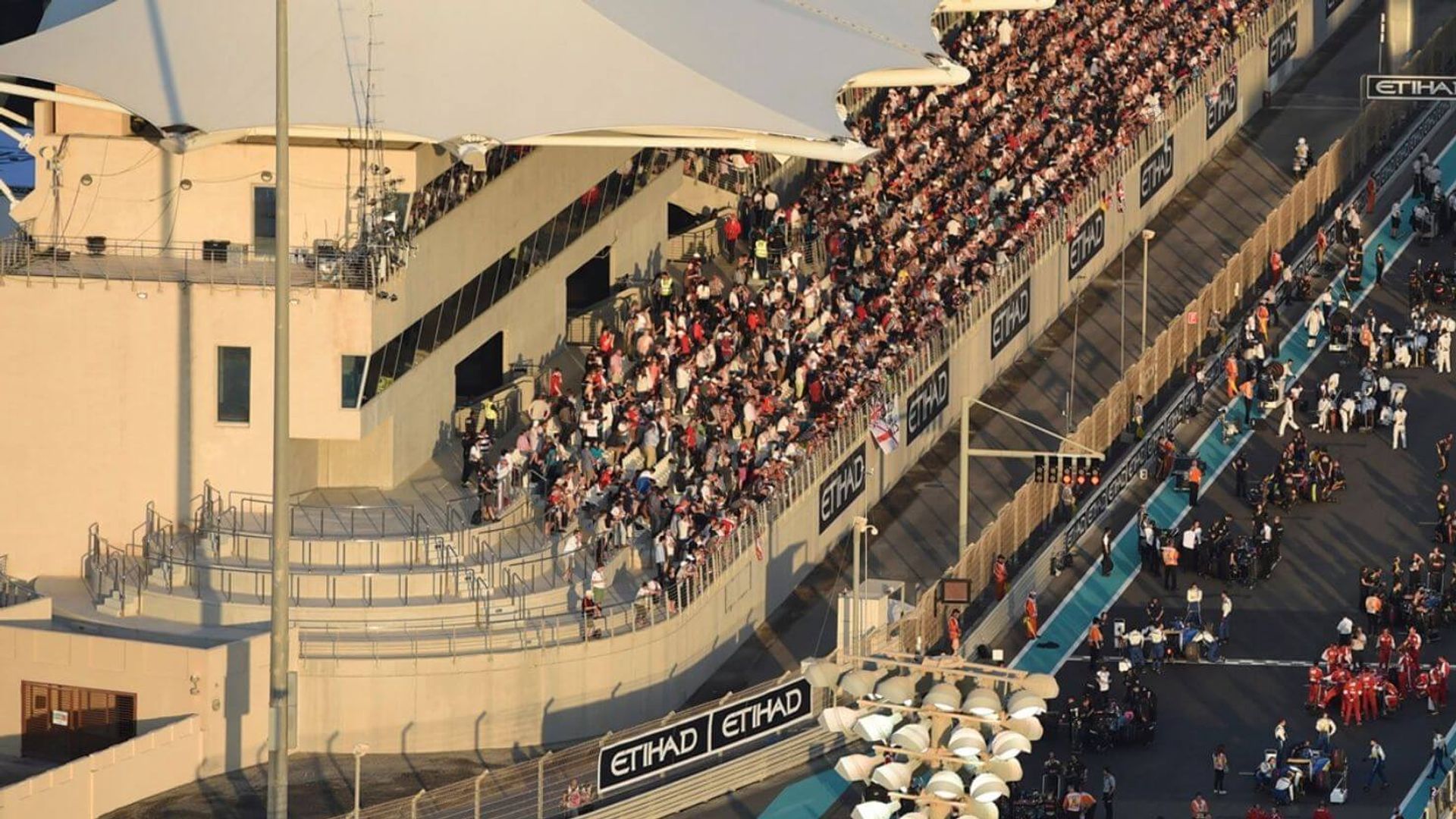
Measuring sports sponsorship ROI becomes exponentially more complex when customers interact with your brand across multiple sponsored properties. A prospect might attend your F1 Abu Dhabi Grand Prix hospitality suite, see your trackside branding during the race, engage with your social campaign, then convert three weeks later.
First-touch attribution credits the initial interaction. Last-touch credits the final touchpoint before conversion. Neither tells the complete story.
Multi-touch attribution models provide clarity: Weight each touchpoint according to its influence on the conversion journey. Hospitality experiences typically warrant higher attribution weight given their relationship-building impact, while passive brand exposure merits lower weighting in the overall customer journey.
Cost Per Acquisition vs Lifetime Value: The Real ROI Equation
Brand engagement metrics and conversion data mean nothing without financial context. The ultimate measuring sports sponsorship ROI formula compares customer acquisition cost through sponsorship channels against lifetime value of acquired customers.
Calculate your sponsorship cost per acquisition by dividing total activation investment (rights fees, activation costs, hospitality, staffing) by the number of new customers directly attributed to the sponsorship. Then compare this CPA against your average customer lifetime value.
For UAE corporate sponsors, acceptable CPA ratios typically range from 1:3 to 1:5, meaning each dirham spent should generate three to five dirhams in customer lifetime value. Well-executed B2B sponsorships with strong hospitality components often exceed these benchmarks when executive relationship impact is properly tracked.
Building Your Measurement Framework
Effective measuring sports sponsorship ROI requires infrastructure established before activation begins. Define your success metrics during contract negotiation, not after the event concludes.
Your measurement framework should integrate brand engagement metrics from on-site activations, relationship progression data from executive hospitality programmes, and digital conversion tracking across all online touchpoints. This three-pillar approach captures the full spectrum of sponsorship value.
The brands winning in the GCC sponsorship landscape are those treating measurement as strategic advantage, not administrative burden. When you can prove ROI with precision, you transform sponsorship from marketing expense into revenue-generating investment.